Would You Have Found This Story Without a Newspaper?
A Real Family History Case Study
Most family history research starts with names and dates, births, marriages, and deaths. But the moments that explain who our ancestors were often live somewhere else entirely.
They live in newspapers.
Old newspapers capture the everyday moments that never made it into official records: accidents, acts of kindness, small achievements, quiet scandals, and ordinary days that unexpectedly shaped lives. These brief articles don’t always announce themselves as important. In fact, many are just a few sentences long, easy to overlook, and easy to dismiss.
But when we slow down and read them closely, they can change everything.
In this series, I share real family history case studies based on actual newspaper articles. Each post walks through how a single clipping, sometimes no more than a paragraph, revealed relationships, character traits, or turning points I would never have uncovered through traditional records alone.
The goal isn’t just to tell a good story. It’s to show how newspapers work as a research tool, and how you can apply the same approach to your own family history.
The Discovery
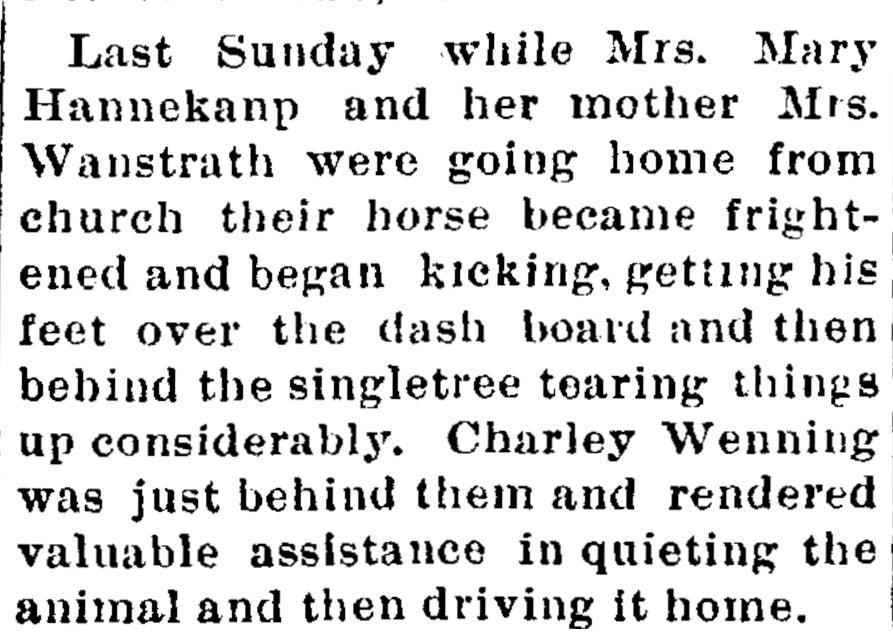
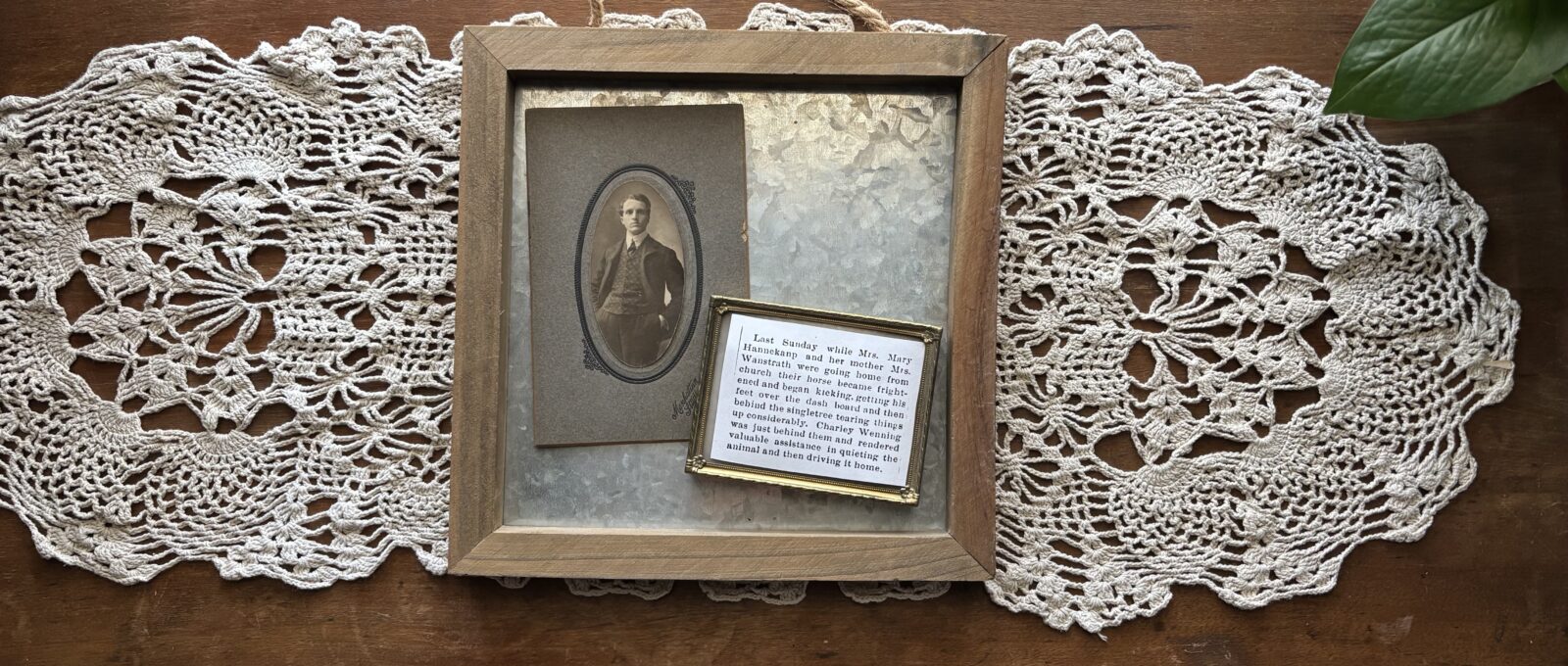
While browsing local newspapers from the 1890s, I came across a short accident notice tucked into a community column. It wasn’t dramatic. There were no bold headlines or sensational language—just a straightforward report about a frightened horse and a damaged wagon.
But one name stopped me immediately.
A great-grandfather.
The article described how, after church one Sunday, a horse pulling a wagon became frightened and began kicking and tearing things up. Two women, Mrs. Mary Hannekamp and her mother, Mrs. Wanstrath, were caught in the middle of the chaos. According to the paper, help came quickly from a man who happened to be just behind them on the road.
That man was my husband’s great-grandfather, Charles Wenning.
Who Appears in the Article?
The article names three people:
- Mrs. Mary Hannekamp
- Her mother, Mrs. Wanstrath
- Charley Wenning, who “rendered valuable assistance” by calming the horse and driving it home
At the time this article appeared, Charles Wenning was not officially connected to the Hannekamp family—at least not in any record I had seen. There was no marriage announcement yet. No engagement notice. No formal documentation linking these names.
And yet, here they were, sharing a moment on a country road.
Why This Article Caught My Eye
What made this article stand out wasn’t just the presence of a great-grandfather’s name. It was the context.
This wasn’t a business transaction or a legal notice. This was an unscripted, everyday moment, one that placed him physically near the woman who would later become his mother-in-law.
This article captured a shared experience before family roles were defined. Before marriage licenses and censuses connected these people on paper, a newspaper quietly recorded them interacting in real life.
That’s something traditional records almost never do.
Pause and think…
When you see familiar surnames together in an article, ask how they might be connected—now or later.
The Visible Facts | What the Newspaper Answered
On the surface, the article tells us quite a bit:
- The incident happened after church
- The horse became frightened and caused damage
- Charley Wenning was nearby and stepped in
- His help was significant enough to be publicly acknowledged
These are the facts the newspaper intended to convey. They tell us what happened and who was involved.
But newspapers often assume readers already know the people and places involved. That’s where the deeper story begins.
The Hidden Clues | What Questions It Raised
Once I slowed down and read this article closely, new questions emerged:
- Why was Charley Wenning just behind them on the road?
- Did they attend the same church regularly?
- Was he already known to the family?
- Was this one of many small interactions that built trust over time?
This article reframed how I understood the family’s origin story. Instead of seeing the marriage as a sudden connection years later, I could now imagine a shared community—neighbors traveling the same roads, attending the same church, stepping in when something went wrong.
This wasn’t just an accident report. It was evidence of proximity, familiarity, and character.
Why Those Clues Matter
This brief article quietly links multiple generations:
- A future son-in-law
- A future mother-in-law
- A grandmother
- A shared religious and social community
It also gives us something invaluable for storytelling: a glimpse of character. Charley Wenning isn’t just a name in a pedigree chart—he’s someone who stepped in during a stressful moment, helped calm a dangerous situation, and was remembered for it.
Those details help us write ancestors as people, not just profiles.
How to Apply This to Your Own Research
To find stories like this in your own family history:
- Browse newspapers by date and location, not just by name
- Pay attention to short notices, not just major events
- Look for recurring surnames across different articles
- Ask how everyday moments might explain later relationships
Some of the most meaningful family connections appear before marriage records ever do.
If you’re stuck…
Try reading the local news your ancestor would have read. Context often leads to connection.
What This Article Taught Me
- Small news items can reveal relationships before they were formalized.
- Accident reports often name helpers, witnesses, and neighbors—future in-laws included.
- Newspapers preserve character traits like bravery, kindness, and community involvement.
Everyday events can become meaningful turning points in family stories.
Would I have found this story without a newspaper?
Not a chance.
Stories like this don’t announce themselves as important. They’re often found in short notices and everyday reports—easy to overlook, yet rich with meaning.
That’s what makes newspapers so valuable for family history research. They don’t just record events; they reveal how people lived, interacted, and became part of one another’s lives.
Whether an article names your ancestor directly or simply reflects the world they lived in, it can add context, character, and connection that traditional records often miss. The most meaningful stories are often waiting there—quietly, in the margins.
Ready to look beyond names and dates? Try NewspaperArchive and see what stories are waiting.