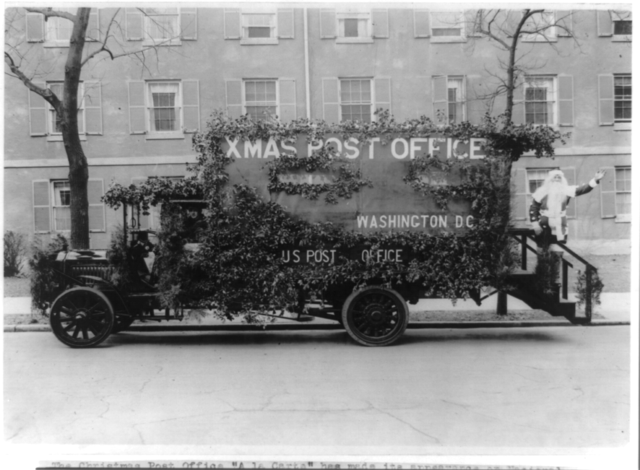
Every December, children across the country sit down to write one of the most magical letters of the season: a note to Santa Claus. Filled with excitement, imagination, and a long list of holiday wishes, these letters have been a cherished tradition for generations. For more than a century, newspapers have captured these charming messages in print, turning simple childhood notes into snapshots of history.
From heartfelt promises to be good, to hopeful requests for toys, treats, and Christmas surprises, these letters reveal the voices of young writers from earlier eras. They preserve not only what children once dreamed of finding under the tree, but also the humor, innocence, and spirit of the season that continues to resonate today. Historic Santa letters offer a delightful glimpse into Christmas traditions of the past and remind us how little the wonder of childhood has changed.
Santa Letters in the 1800s: A Holiday Tradition Begins
In the late 19th century, newspapers began printing letters addressed to Good Old Saint Nick. These early Christmas features often blended innocence, humor, and childhood wishes.
Example clippings and transcriptions from the NewspaperArchive collection:
Discover charming 1890 Santa letters from Bloomington, Illinois, featuring classic Christmas wishes from two young sisters.
This 1899 Santa letter from Dubuque, Iowa, captures the pure sincerity of a child’s wishes, made even more endearing by gentle, heartfelt misspellings.
A delightful 1891 Santa letter from Cumberland, Maryland, reveals the timeless excitement of the holiday season, beautifully preserved in old newspapers.
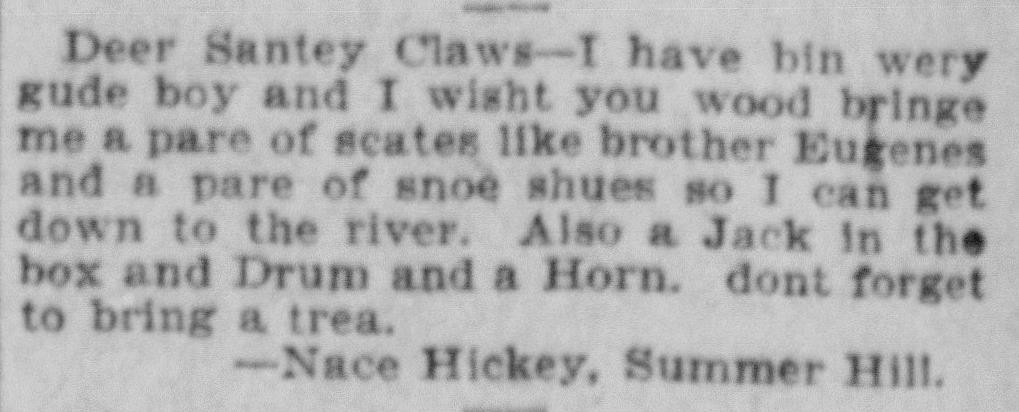
These pieces highlight the early roots of Santa letter publishing and show how Christmas traditions were recorded in communities across the country.
Early 1900s: The Growth of a Holiday Newspaper Tradition
By the early 20th century, Santa letters had become a beloved staple in newspapers. Many publications set aside full pages for children’s notes to Santa, and entire communities looked forward to reading them.
Among the examples preserved in the newspaper archives are:
A 7-year-old girl in Frederick, Maryland, unable to go to school that winter, wrote this touching 1913 Santa letter filled with wishes for both herself and her sister.
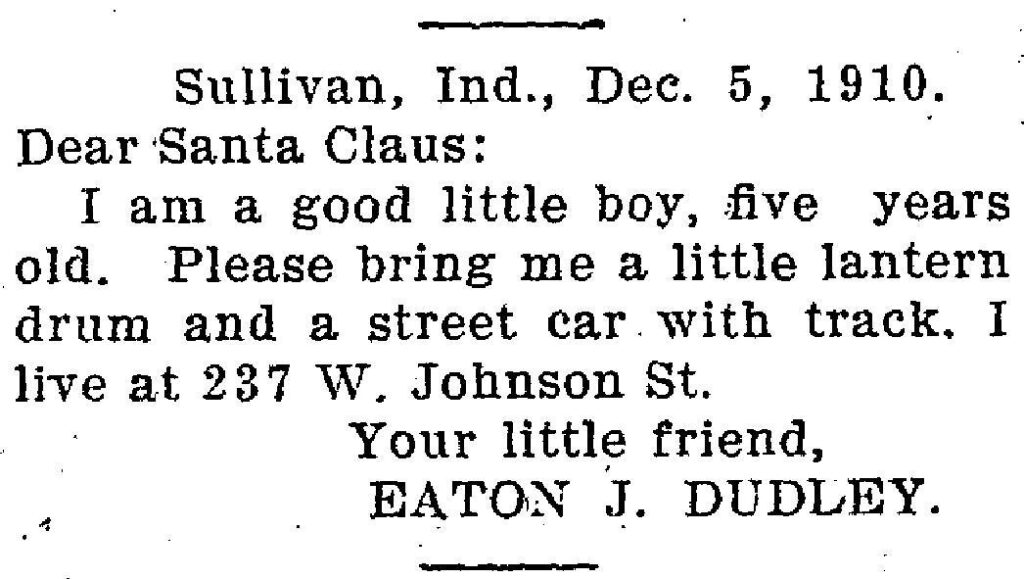
In this 1910 Sullivan, Indiana, Santa letter, a young boy proudly declares he has been good and asks Santa for a lantern drum and a streetcar set.
This 1909 Santa note from Laneburg, Arkansas, shows Chloe’s Christmas wishes, from a big doll and toy wagon to raisins, candy, and apples, all sealed with a cute P.S. about bedtime.
These printed letters preserve childhood voices from towns large and small and offer a window into early American holiday culture.
Love discovering old Santa letters like these? Follow my Storied account for more holiday favorites pulled from historic newspapers.
A Notable Moment in Santa Letter History
In 1906, The New York Times published an article titled “Want to Play Santa Claus?” which explained that thousands of Santa letters arriving at the Post Office were sent to the Dead Letter Office. At the time, mail addressed to Santa Claus, North Pole, was considered undeliverable. The article raised questions about what should be done with these letters and inspired conversations that eventually shaped how Santa mail was handled in future decades.
Santa Letters in Advertisements and Community Events
Santa letters also appeared in promotional campaigns. Some businesses and newspapers encouraged children to send in letters to win prizes or be featured in print.
Examples include:
- A Harned and Von Maur advertisement inviting children ten and under to submit their best letter for a chance to win prizes.
- A 1927 Santa Parade advertisement telling children twelve and under to write letters that Mrs. Santa would read and answer.
- The Evening Journal publishing daily prize-winning letters, such as a poem written by Bonnie Jean Bartz.
These advertisements show how Santa letters became part of holiday marketing, community engagement, and children’s creative expression.
Could Your Ancestor’s Letter Be in a Newspaper? Tips for Finding Them
Santa letters are more than cute holiday moments. They can be unexpected pieces of family history. If you want to search for possible letters written by children in your family, here are a few helpful strategies:
1. Search by surname and location
Children often signed their full name and hometown. Try combining a surname with a town, county, or school name for more accurate results.
2. Browse seasonal issues
Santa letters were usually printed in December. Searching newspapers from mid-November through Christmas can lead you to special holiday sections.
3. Look for themed pages or supplements
Many publications featured pages titled Letters to Santa, Santa Claus Mail Bag, or Dear Santa. Browsing these sections can reveal multiple letters at once.
4. Check local newspapers where your ancestors lived
Small-town newspapers were especially likely to print children’s letters. Even if your ancestor later moved, their childhood town might hold a hidden gem.
5. Try spelling variations
Children sometimes misspelled words or signed their name in unique ways. Including variations in your search can help you find unexpected matches.
Historic Santa letters remind us that while the world has changed, the wonder of childhood at Christmas has stayed beautifully the same. These small notes offer a glimpse into the past and into the lives of the children who wrote them. Whether you are searching for family connections or simply enjoying the nostalgia, exploring these letters brings the spirit of the season to life in a special way.